Many organisations invest heavily in Sales Enablement.
New methodology.
New frameworks.
New techniques.
New playbooks.
The team leaves the training energised and motivated.
And three months later, much of the old behaviour is back.
Why?
Because knowledge does not automatically become behaviour.
A salesperson may understand how to ask better discovery questions, qualify more effectively or create stronger business cases.
But when the next customer conversation starts, people often fall back on what they have practised most.
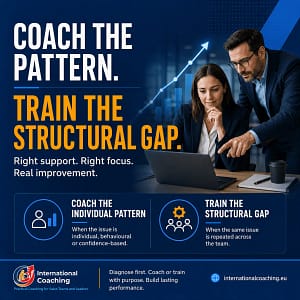
This is where Sales Enablement needs to go beyond training.
Sales managers need to coach the new behaviour in real situations:
- Review actual sales conversations.
- Identify one specific behaviour to improve.
- Practise it.
- Observe it again.
- Reinforce it consistently.
Training creates awareness.
Coaching creates repetition.
Repetition creates behaviour.
And behaviour is what ultimately changes sales performance.
For Sales Enablement leaders, the question should therefore not only be:
“Did our people complete the training?”
It should be:
“Are they behaving differently in customer conversations three months later?”
If your organisation is investing in sales training but the expected behaviour change is not lasting, I would look at the coaching and reinforcement around the training before investing in another programme.
How do you make sure training actually changes behaviour in your sales organisation?
If this is a challenge in your organisation, let’s talk.
#SalesEnablement #SalesCoaching #SalesTraining #SalesPerformance #CommercialExcellence #SalesLeadership