customer-centric sales: Customer-centric sales requires aligned incentives, ownership and customer experience—not just promises about putting customers first.
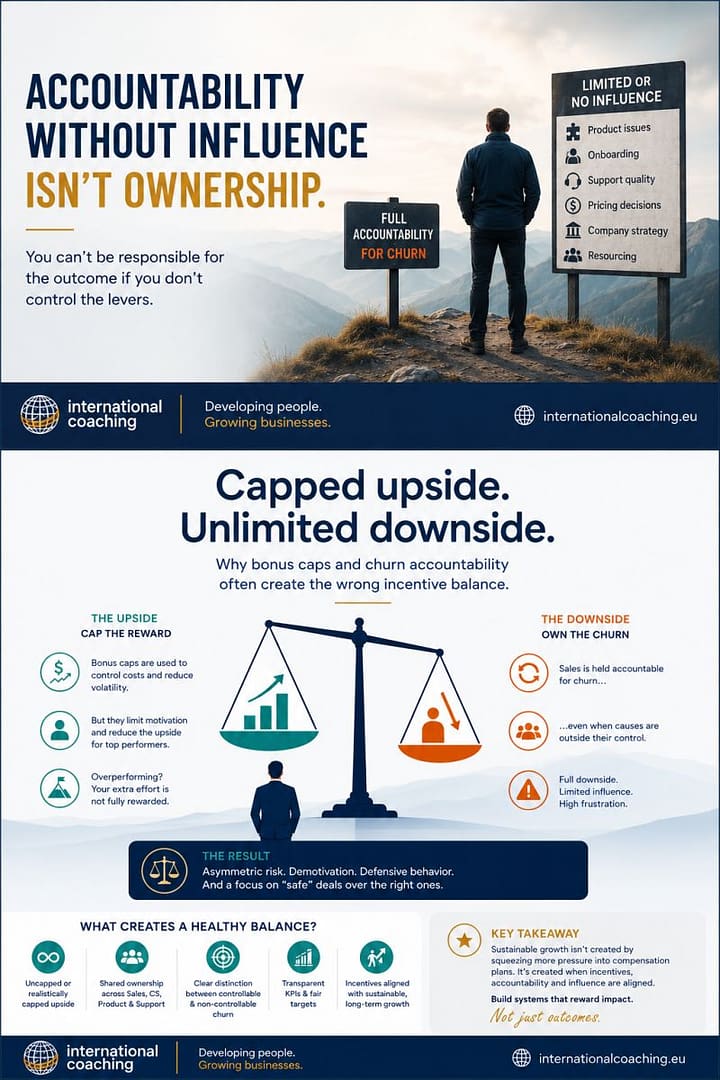
But then they build compensation plans that simultaneously:
* cap upside for top performers,
* and punish sales for churn they often can’t control.
The logic behind it is understandable.
Leadership wants:
* predictable compensation costs,
* healthier revenue,
* less “sell at all costs” behavior,
* stronger retention,
* better forecasting.
Especially in SaaS, recurring revenue matters more than flashy quarter-end deals.
So companies started saying:
“If sales benefits from closing the customer, they should also share responsibility for retention.”
Fair enough — in theory.
The problem starts when commercial teams are held accountable for churn caused by:
* product gaps,
* weak onboarding,
* poor support,
* implementation failures,
* pricing decisions,
* leadership choices,
* or unrealistic customer expectations set by the business itself.
That creates an asymmetric incentive structure:
📈 Overperform → upside is capped
📉 Churn happens → downside is fully yours
And that’s where motivation quietly breaks.
Because accountability without influence doesn’t feel like ownership.
It feels like risk transfer.
The strongest commercial cultures I’ve seen usually share a few traits:
* uncapped or realistically capped incentives,
* shared ownership between Sales, CS, Product and Support,
* transparent KPIs,
* and a clear distinction between controllable vs non-controllable churn.
Sustainable growth is not created by squeezing more pressure into compensation plans.
It’s created when incentives, accountability and influence are aligned.
Curious how others see this:
Should sales teams carry churn responsibility? And if yes — to what extent?
Originally published 04 June 2026 on LinkedIn. Follow Eric Stijnman on LinkedIn for more sales coaching and leadership insights